Benchmarking quantum algorithms for real quantum chemistry
Four ground-state solvers, one CO₂ molecule, and a very wide spread of runtimes.
- Role
- Project lead · VQE and Exact Diagonalization author
- Context
- MolKet
- Duration
- Multi-month team project
- Client
- Taha Selim
- Coach
- Marten Teitsma
- Quantum computing
- Qiskit
- Python
- IBM Quantum
- Project leadership
-
-185.0648Ha
SQD ground-state energy
Reached in 3.24 seconds on a laptop CPU, with a real quantum computer performing the sampling.
-
6.4hours
for Exact Diagonalization to agree
Same answer, confirmed exactly — at the cost of 50 GB of RAM.
-
~72years
projected DMRG runtime
Exponential scaling, extrapolated from small-system behaviour. Never run to completion.
Wall-clock runtime to compute the CO₂ ground-state energy
STO-3G basis, Jordan-Wigner mapping. Logarithmic scale — each gridline is a different order of magnitude.
| Algorithm | Runtime | Basis | Notes |
|---|---|---|---|
| SQDSample-based Quantum Diagonalization | 3.24 s | Measured | Ran on a laptop CPU while using a real quantum computer for the sampling step. |
| EDExact Diagonalization | 6.4 h | Measured | The exact reference. Confirmed the SQD result, using 50 GB of RAM to do it. |
| DMRGDensity Matrix Renormalization Group | ~72 yr | Extrapolated | Extrapolated from small-system scaling. Not run to completion — exponential scaling made a full run impossible. |
SQD and ED measured on commodity hardware; DMRG extrapolated from small-system scaling, not run to completion.
VQE is omitted from the chart: the circuit was fully specified, but executing it exceeded IBM Quantum's free monthly measurement allocation.
The problem
Computing the ground-state energy of a molecule is the canonical hard problem in quantum chemistry — and the one quantum computing is most often promised to solve. We wanted to know how much of that promise currently survives contact with real hardware.
So we picked one genuine molecular problem, the ground state of CO₂, and ran four different solvers at it: two quantum-native approaches and two classical references.
My role
I led the project. That started with the parts nobody puts in a portfolio — setting up the team's collaboration framework and issue-tracking process on day one, and keeping the project plan current throughout, tracking progress and risk so that we hit our milestones on schedule across the full project.
On the technical side I implemented VQE and Exact Diagonalization myself and contributed to the first iteration of SQD, together around 4,000 lines of production code.
What we found
The spread was larger than any of us expected, which is why the chart above needs a logarithmic axis to be readable at all.
SQD converged to -185.0648 Ha in 3.24 seconds on a laptop CPU, using a real quantum computer for the sampling. Exact Diagonalization confirmed that number was correct — and took 6.4 hours and 50 GB of RAM to say so. DMRG hit a hard wall: exponential scaling put a full run at an estimated 72 years, which is about as clean an illustration of classical breakdown as you could ask for.
VQE was fully built — ansatz, Hamiltonian, optimizer — and never ran, because the measurement count exceeded IBM Quantum's free monthly limit. We validated the SQD circuit on real IBM Quantum hardware and the results matched simulation.
Conclusion
For NISQ-era quantum chemistry, SQD is the practical winner: fast, memory-efficient and accurate. ED remains the indispensable exact reference for small systems — you need something to check the quantum answer against.
The wider lesson was about how far current hardware still is from practical advantage. Free-tier access limits alone were enough to stop VQE running at all, while SQD's noise resilience made it the only method we could validate end to end on real quantum hardware.
Thanks
A special thanks to Taha Selim for being an outstanding client. He always made time to answer our questions and explain the core theory when we needed it, and pointed us toward using CCSDT to freeze the outer electrons — trading some measurement accuracy for a significant speed boost. His genuine excitement about the project made this one of the most rewarding things I have worked on.
Next
Another project
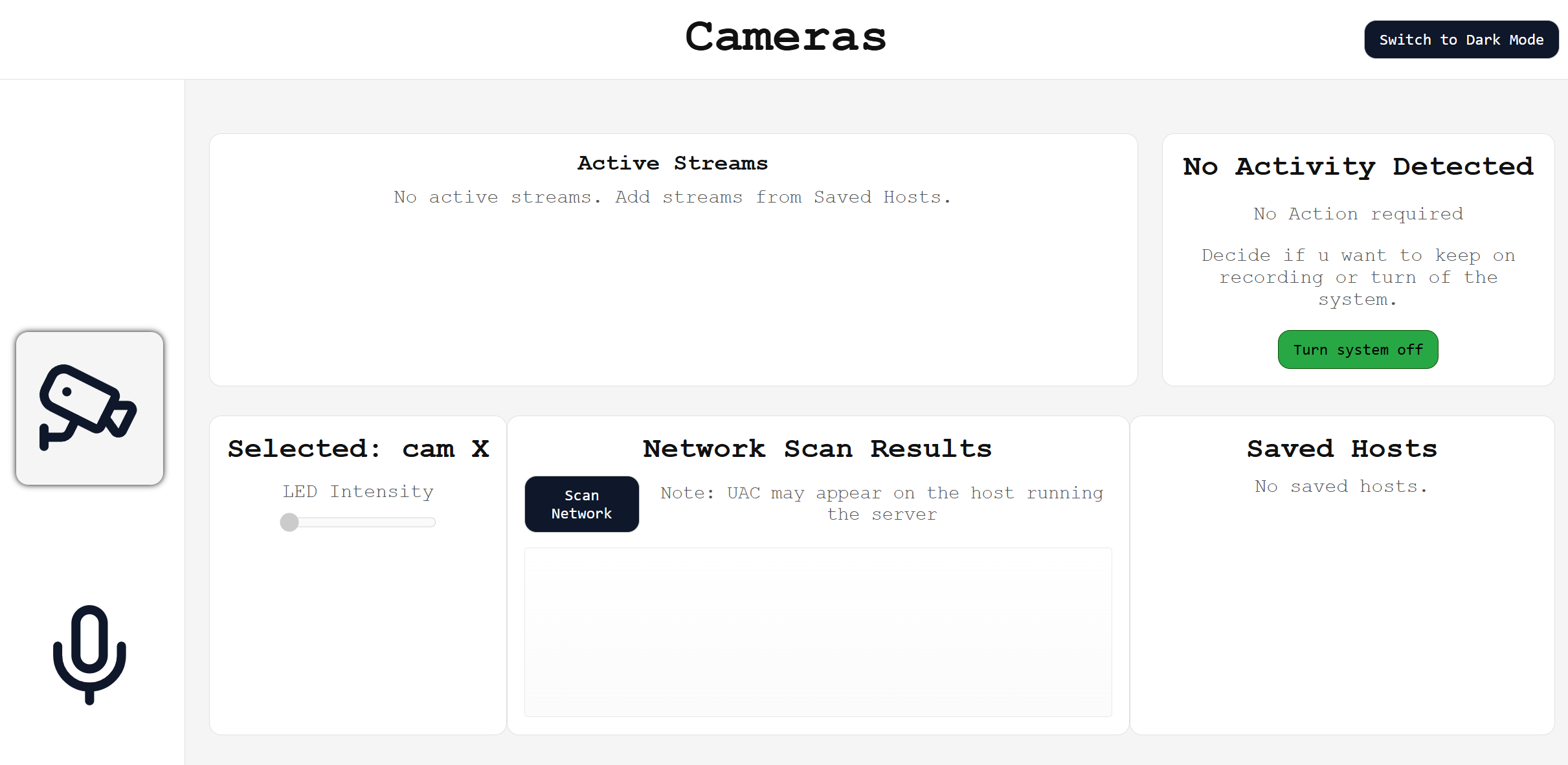
Society 5.0 · Sprint-based team project
Echoes
An ESP32 camera, a custom dashboard, and a deliberate argument about who surveillance is designed for.
A live video dashboard streaming from an ESP32-CAM over TCP, built twice on purpose: a Light version designed around consent, and a Dark version designed to be invisible.
Hardware and software developer
- ESP32-CAM
- JavaScript
- TCP streaming
- Embedded
- Design ethics
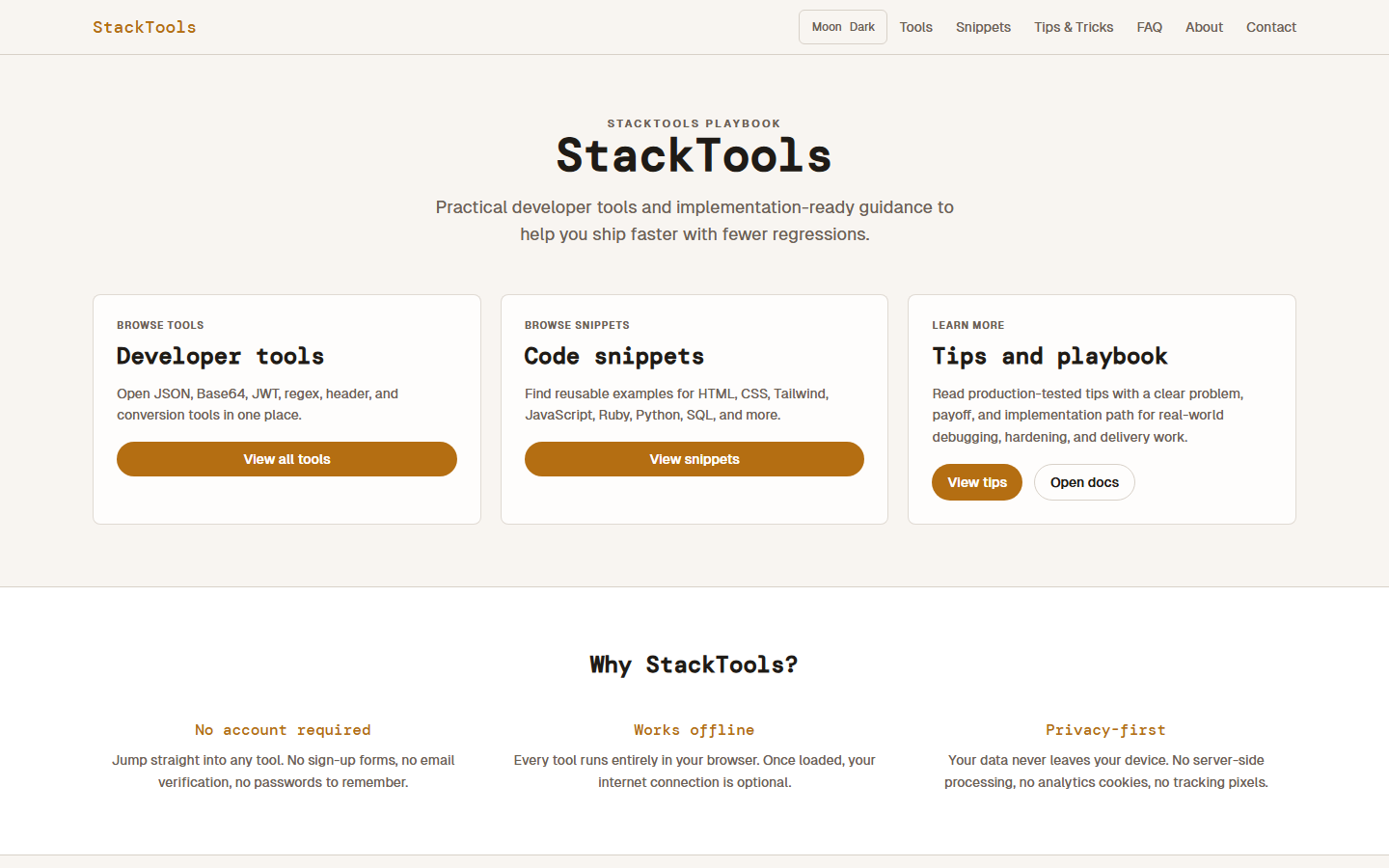
Live, in active development
StackTools
451 snippets I kept needing, 51 tools that run in the browser, and the first website I ever put online.
A free developer site at stacktools.org. It started as somewhere to keep the snippets I kept having to look up again — including 24 PowerShell snippets for Active Directory, the kind that are genuinely hard to find — and grew into 451 snippets, 51 browser-only tools and a written playbook.
Designer, developer and maintainer
- React
- TypeScript
- PowerShell
- Client-side only
- Cloudflare
- Product design